
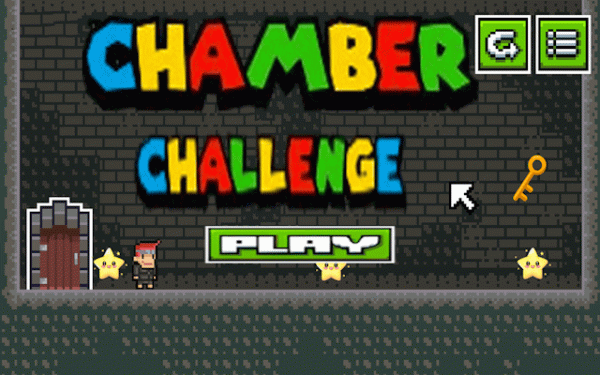
Key Quest: Puzzle Runner
Reviews
Key Quest: Puzzle Runner stands out for its thoughtful level design. Each room presents a unique challenge that feels satisfying to solve. The controls are responsive, and the visual feedback helps players learn quickly. The difficulty curve is well-paced, never feeling frustratingly hard or boringly easy. It is an excellent choice for families looking for a cooperative puzzle experience or for anyone who enjoys logic-based games without time pressure.
About this game
Room-by-Room Puzzle Design
Each chamber in Key Quest: Puzzle Runner functions as a self-contained puzzle. The goal is consistent: locate a hidden key and then reach the locked door that leads to the next area. What changes is the arrangement of obstacles and interactive elements. Early rooms introduce basic concepts like a single switch that opens a nearby barrier. Later chambers combine multiple switches, movable blocks, and pressure plates that must be activated in a specific order. This structure keeps the core objective clear while allowing the complexity to scale naturally.
Interaction Mechanics
Players control their character using keyboard arrows or touch gestures. The primary actions involve moving, pushing blocks, and activating switches. Some blocks can be repositioned to create bridges across gaps or to reach elevated platforms. Switches may control doors, moving platforms, or other environmental elements. Pressure plates often require the player to stand on them or place a block to keep them depressed. Understanding how each element interacts with others is key to solving each room efficiently.
Progression and Difficulty Curve
The game introduces new puzzle types gradually. After mastering basic switch-and-door setups, players encounter timed sequences where a switch must be activated and then quickly navigated to a door before it closes. Moving obstacles appear later, requiring precise timing to pass through. The difficulty increases not through faster reflexes alone, but through the combination of logical deduction and careful movement. Rooms often have multiple possible paths, but only one leads to the key and exit.
Visual Clarity and Feedback
The visual style is clean and uncluttered, with each interactive element clearly distinguished from the background. Switches are color-coded to match the doors they control, reducing confusion. When a puzzle element is activated, there is immediate visual feedback—a door slides open, a platform rises, or a light turns on. This design helps players understand the consequences of their actions without needing text explanations. The focus remains on the puzzle itself, not on deciphering the interface.
Family-Friendly Design Philosophy
Key Quest: Puzzle Runner is designed to be accessible to a wide age range. There is no time limit on most puzzles, allowing players to think at their own pace. The game does not include any violent content, and the challenge comes from mental engagement rather than speed or combat. Younger players may need assistance with later levels, but the gradual difficulty curve means most can progress independently through the early stages. This makes it suitable for family play sessions where adults and children can work together on tougher puzzles.






Comments
0 comments